
Thoughts on Tarot
by Natalie | Queen of Arcana
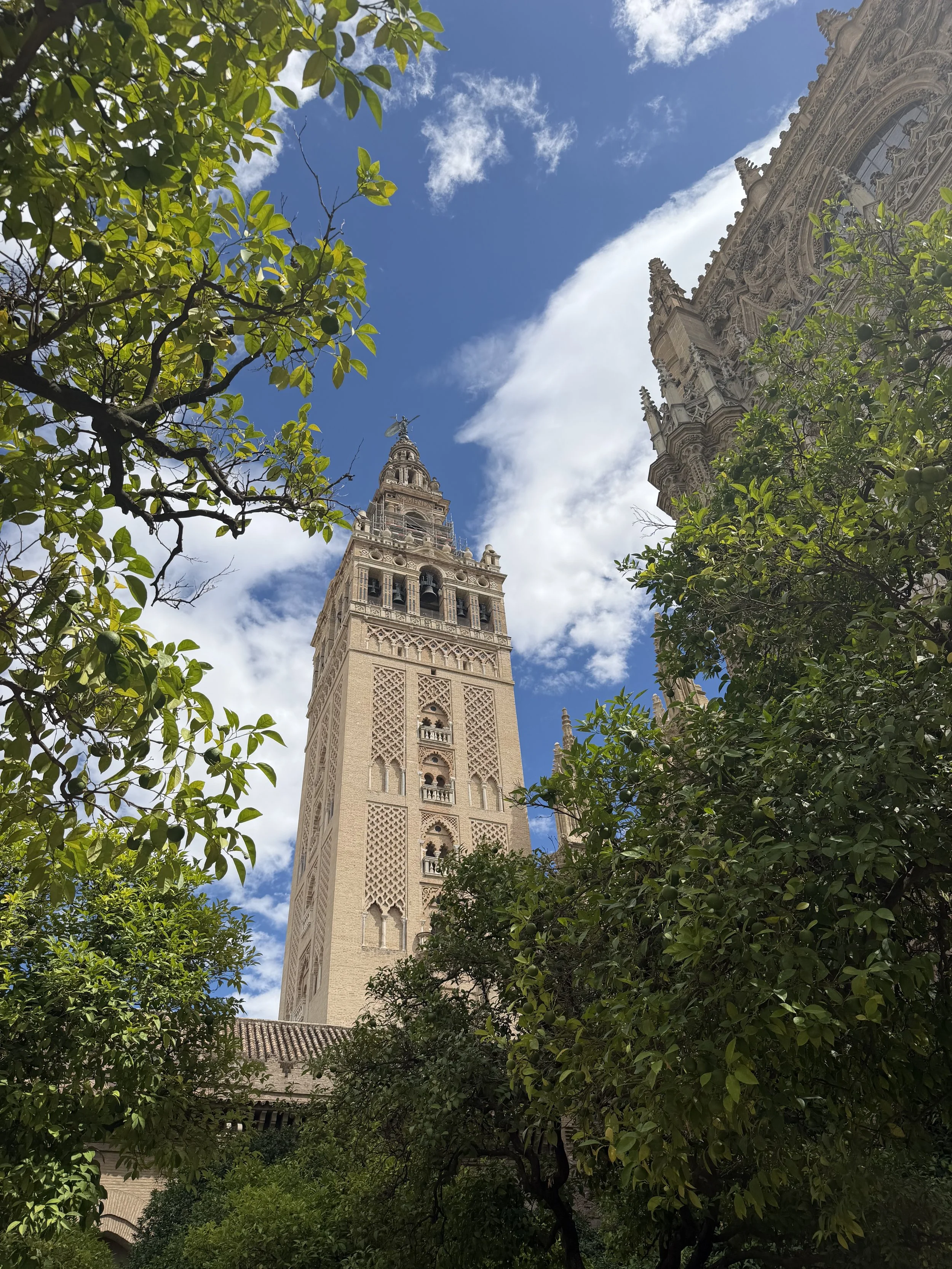
Dismantling The Tower (From an Actual Tower)
Tarot is everywhere if you’re looking for it. And me being me, I always am.
Which is why, despite being on holiday in one of my favourite cities, Seville, where I was making every effort to ‘unplug’, I couldn’t help but… make it tarot.
Seville is full of history and character, and so while I was there, like many other tourists, I went to the top of La Giralda, the bell tower attached to La Catedral de Sevilla (the largest gothic cathedral in the world) to see the striking views of the city. To get to the top, you have to walk a winding slope that wraps all the way around the internal walls of the tower - over 35 floors of dark, narrow hallway. Upon entering the tower, though, the total number of floors is unclear. Certainly, judging by the height of the building, there are going to be many floors. But with the gently sloping, dimly-lit path that you’re walking, it’s hard to tell when you reach floor 15 whether there’s a total of 20 or 50.
All of this was a bit disorienting.
And so, as we climbed the floors of the tower, I began to feel increasingly uncomfortable. Seville was approaching 40 degrees. The narrow hall was hot and full of people. I had little concept of where we were, other than, from the occasional window we passed, that we were very high up. It felt claustrophobic and stifling.
Naturally, my mind wandered to The Tower card…
What Gender Really Means in Tarot
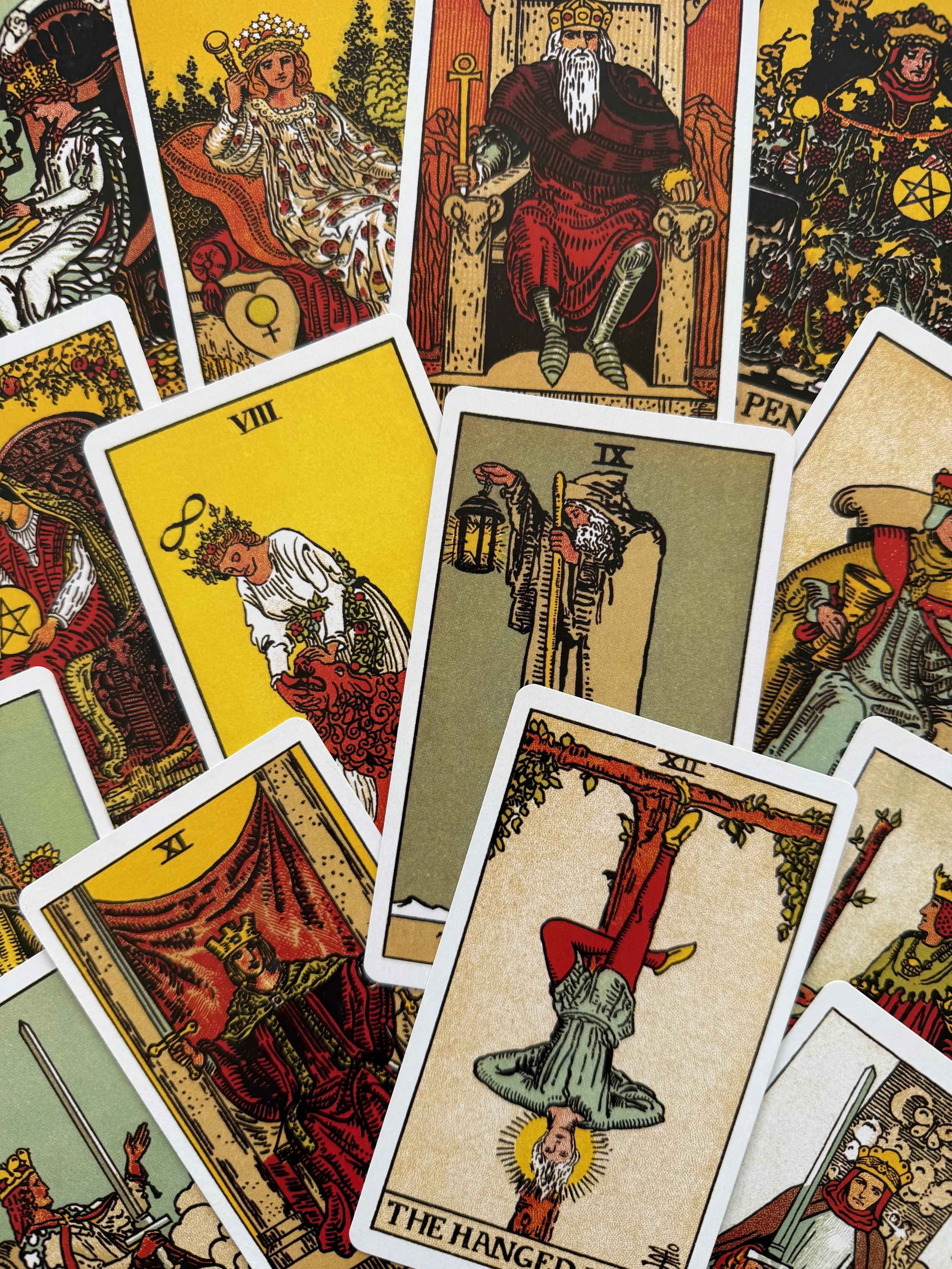
This is a topic that isn’t discussed nearly enough, and yet, is perhaps one of the most important. Of course, we can’t escape the fact that a lot of the tarot cards are gendered. Kings, Queens, Knights & Pages, even when modernised to the Mothers, Fathers, Sons & Daughters, have distinct gender attachments. Likewise, Major Arcana cards such as The High Priestess, The Empress, The Emperor, The Hanged Man - I could go on - are gendered figures.
The traditional Rider Waite Smith imagery, which most tarot decks are based upon, was originally illustrated in 1909 by Pamela Coleman Smith. Its imagery is not the most inclusive, which is unsurprising considering the context of the time it was created. Many people struggle to connect with it, understandably so, because the images don’t feel relatable and don’t ‘connect’ with them. Modern creators have adapted wording and created decks with more diverse representation, which is wonderful. But no matter how we change these cards visually, the gender associations with the traditional cards (and their traditional names) from The Empress to the King of Wands, can greatly impact the way we perceive them - and more importantly, whether we perceive their wisdom to be relevant to us at all.
And it’s easy to understand why. Historically, we interpreted these cards more literally than we do now. A King of Wands might have once been interpreted as a sign you’d marry a red-haired man, or The High Priestess might have indicated that an older woman was significant in your life. However, increasingly, tarot’s reputation is moving away from the deterministic predictor of fate, and more and more people are seeing the value in utilising the tarot as a facilitator of our personal growth. And so, a reader is now more likely to interpret these same cards as aspects of the individual they are reading for.
Because here’s the thing, all of us are capable of embodying and/or experiencing every single one of the 78 cards in the tarot deck…
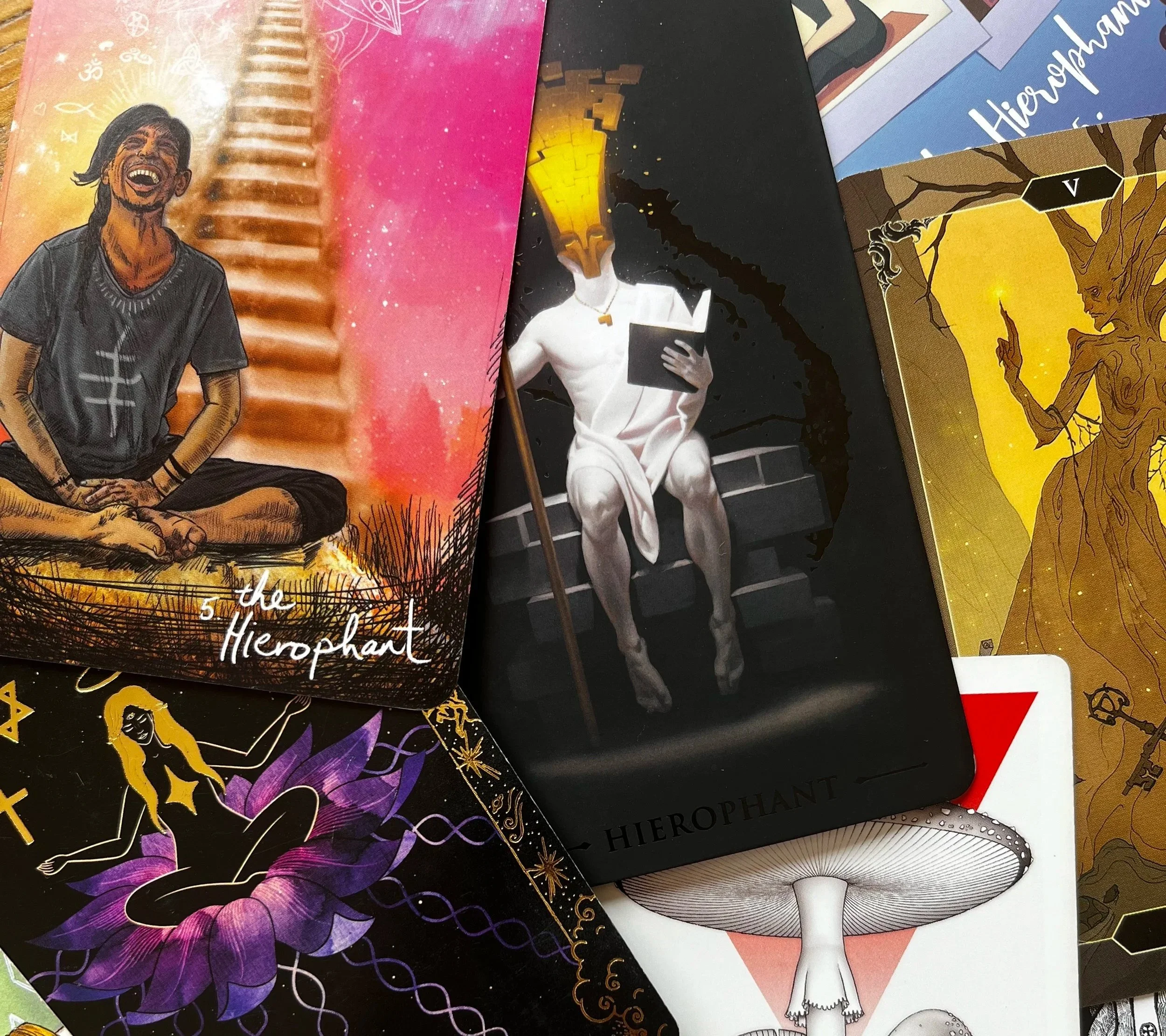
Reclaiming The Hierophant
With all of his associations with ordered religion, patriarchal systems and the pressure to conform, The Hierophant is a notoriously unpopular archetype in the tarot community. Believe me, I get it - especially in today’s sociopolitical climate.
But no card is all bad, the same as no card is all good. In fact, The Hierophant is far more neutral than you might think.
Yes, he represents all of those things, but he represents so much more.
When viewed more positively, we see him as a mentor or a teacher, a representation of community and tradition. But these are just buzzwords. And when you line them up alongside the others - religion, patriarchy, conformity, teacher, community, tradition - even the positive ones look a little less so. In today’s world, these words can lead us to see him as a symbol of someone who might abuse a position of power, or who forces us to live by rules that aren’t in alignment with who we are, or who gatekeeps wisdom, spiritual connection and truth.
I know - things aren’t looking good for our buddy, The Hierophant. But bear with me, because we’re just getting to the good stuff…