
Thoughts on Tarot
by Natalie | Queen of Arcana
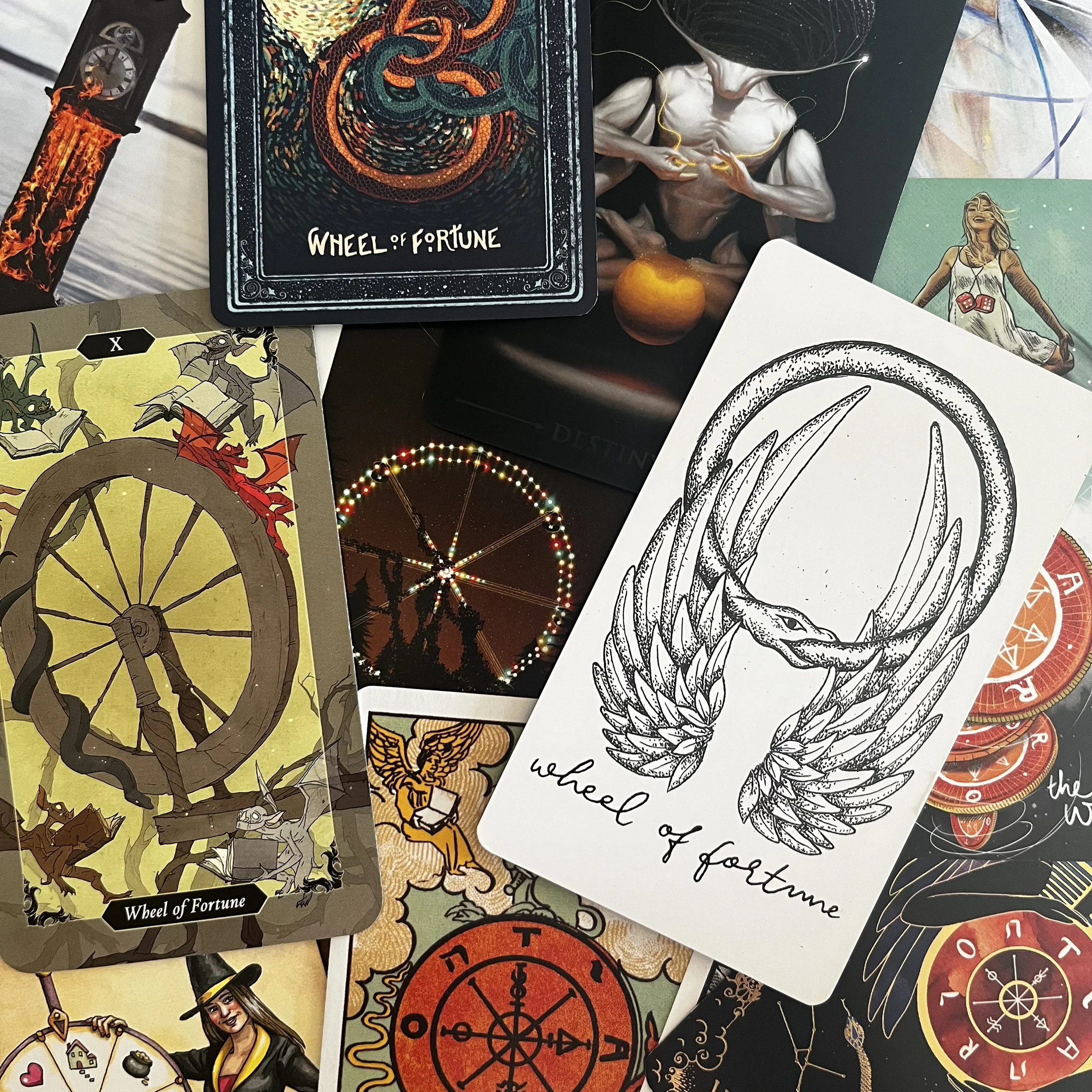
2026: Year of The Wheel
As you may have seen in last month’s post about The Hermit, each year has a corresponding tarot card, calculated by adding the digits of the year together. In 2025, this card was number 9, The Hermit. This means that 2026’s Card of The Year is the Wheel of Fortune. Buckle up, because the Wheel of Fortune promises one hell of a ride.
This can be one of the most misunderstood archetypes of the tarot deck because of (surprise, surprise!) the way it’s portrayed in the media. The Wheel of Fortune is not a harbinger of bad luck, though watching rom-com Just My Luck in the 2000s (long before I came by my first tarot deck) certainly made me think so. This card isn’t an ominous omen that bad luck will befall you either, much like the Death card isn’t an omen of death! Like all tarot cards, the Wheel of Fortune is complex and nuanced, and focusing on the idea of ‘luck’ really misses the point.
So, what does The Wheel of Fortune actually represent? First and foremost it is, well, a wheel, and so it is representative of cycles, in their many forms. This can be patterns that need to be addressed or cycles that need to be honoured. Furthermore, wheels and cycles are also a symbol of perpetual motion, something that indicates change. We also cannot ignore the mystical nature of the Wheel of Fortune. While I am a big proponent of free-will (my practice largely centres around using tarot as a tool of empowerment), some things are indeed bigger than us and outside of our control, and this card serves as a reminder.
And so these are our key themes for 2026 - cycles, change and control…
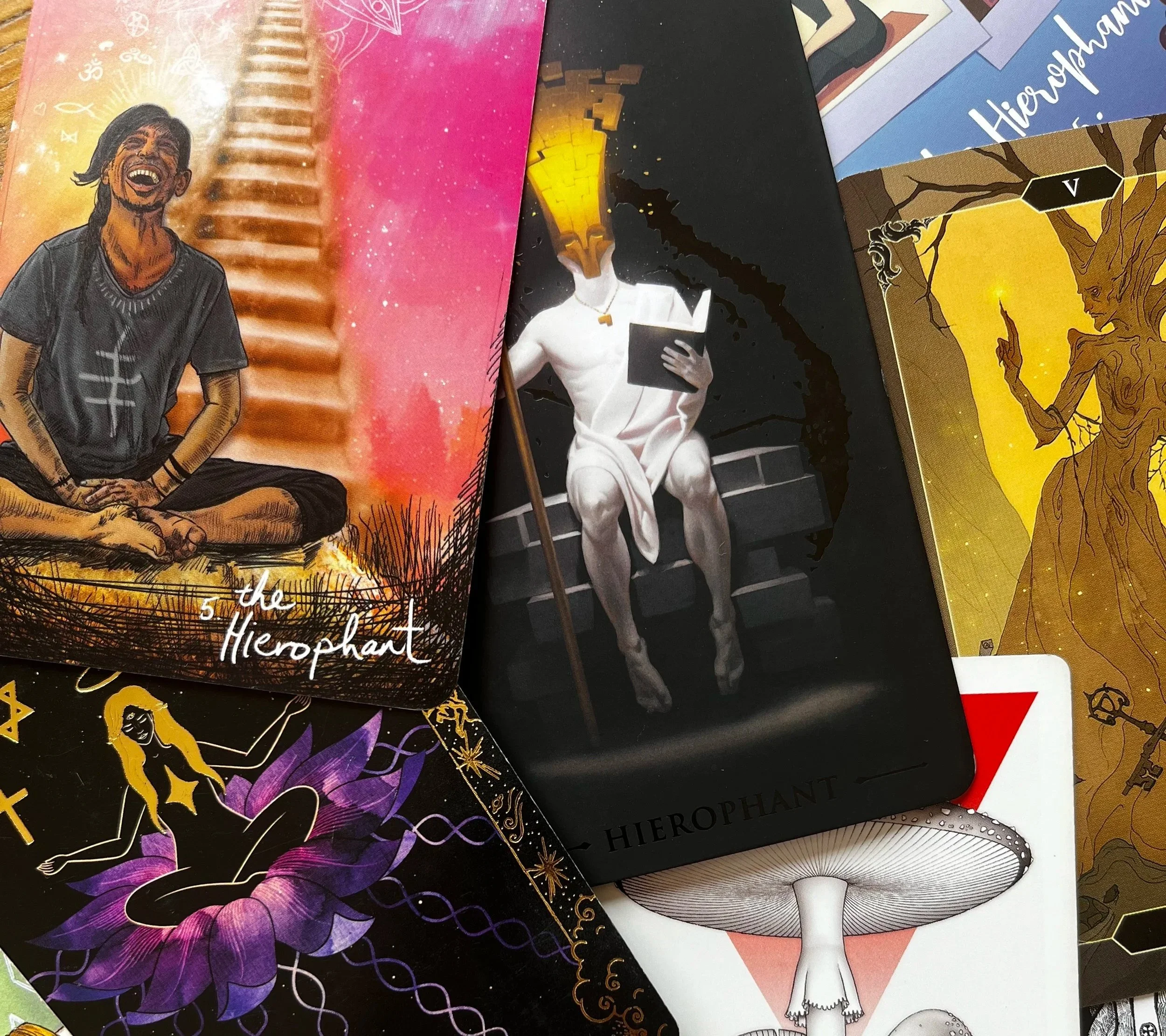
Reclaiming The Hierophant
With all of his associations with ordered religion, patriarchal systems and the pressure to conform, The Hierophant is a notoriously unpopular archetype in the tarot community. Believe me, I get it - especially in today’s sociopolitical climate.
But no card is all bad, the same as no card is all good. In fact, The Hierophant is far more neutral than you might think.
Yes, he represents all of those things, but he represents so much more.
When viewed more positively, we see him as a mentor or a teacher, a representation of community and tradition. But these are just buzzwords. And when you line them up alongside the others - religion, patriarchy, conformity, teacher, community, tradition - even the positive ones look a little less so. In today’s world, these words can lead us to see him as a symbol of someone who might abuse a position of power, or who forces us to live by rules that aren’t in alignment with who we are, or who gatekeeps wisdom, spiritual connection and truth.
I know - things aren’t looking good for our buddy, The Hierophant. But bear with me, because we’re just getting to the good stuff…